
You ever drive by a hay field, see steam rolling off the baler, and think — hold on, didn’t they just spend three days drying that stuff out? Why on earth are they putting water back into it?
Everybody asks that. And once you hear the answer, it makes all the sense in the world.
It’s All About the Leaves
Here’s what most folks don’t think about. With hay — alfalfa especially — the leaves are where the value is. They carry something like 71% of the forage quality. The stems are mostly filler. So when those leaves shatter off and blow away, you’re not losing a little trash off the top. You’re losing the good stuff. Somebody actually put a number on it: about $7 a ton for every 1% of leaf you lose. That adds up in a hurry.
And dry hay is brittle. Bale it too dry and the leaves just crumble. So the old way around it was to wait for dew — that little bit of overnight moisture softens everything up just enough to bale it clean.
Trouble is, dew runs on its own schedule, not yours. You get a couple hours before the sun burns it off, and that’s it. And out here, where it’s hot and dry and the wind never lays down? Some mornings you don’t get dew at all. So you’re stuck choosing: bale too dry and beat up your crop, or wait around and pray a storm doesn’t roll in and take the whole cutting.
Neither one’s a good spot to be in.
So You Make Your Own Dew
That’s the whole idea behind a Staheli West DewPoint steamer. Instead of waiting on the weather, you make your own dew.
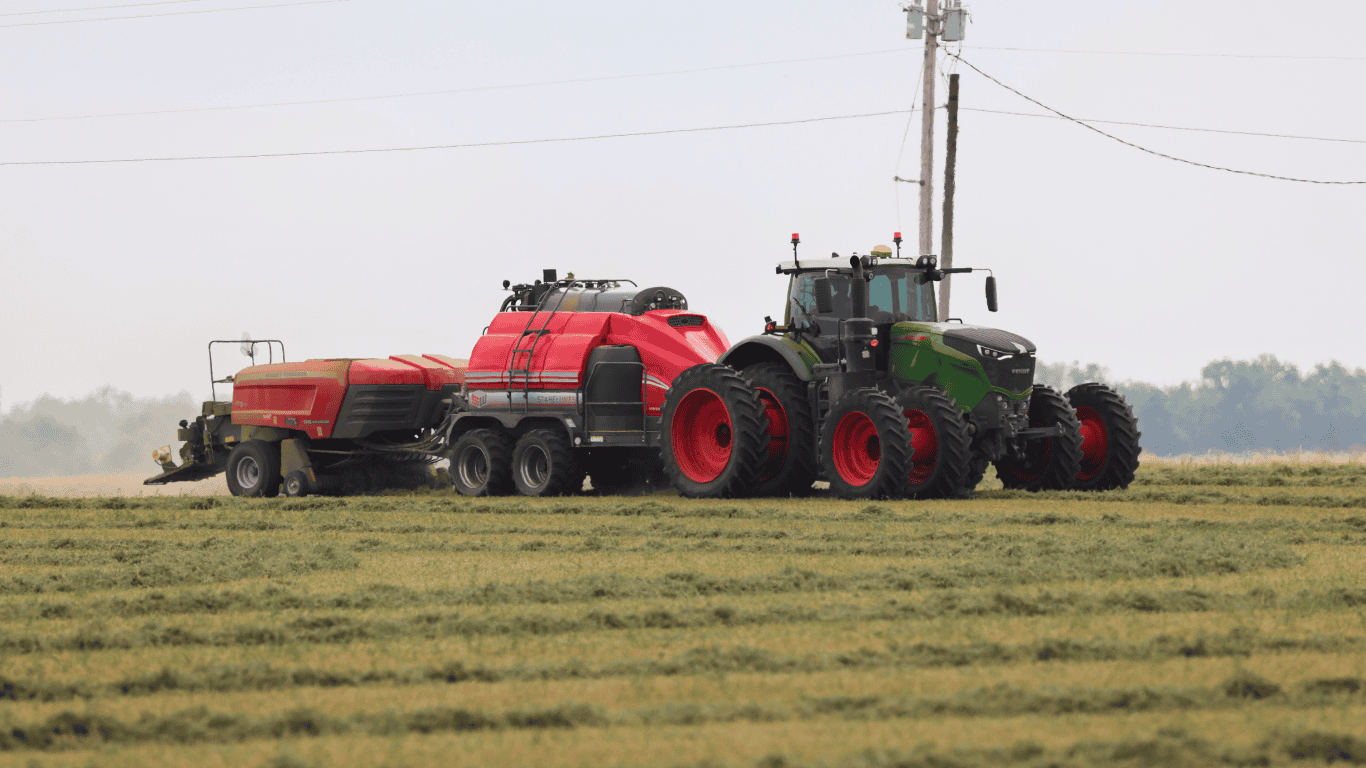
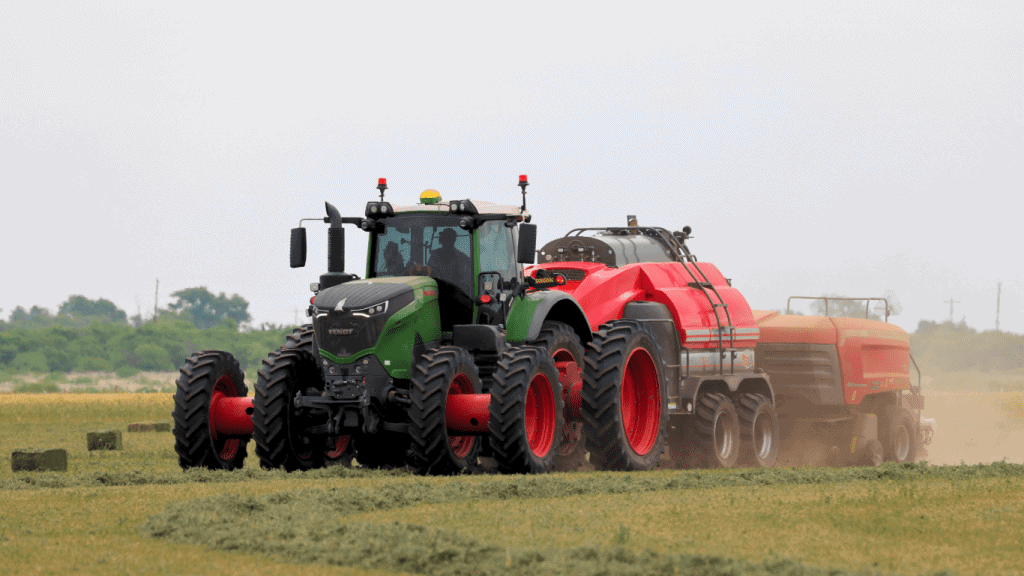
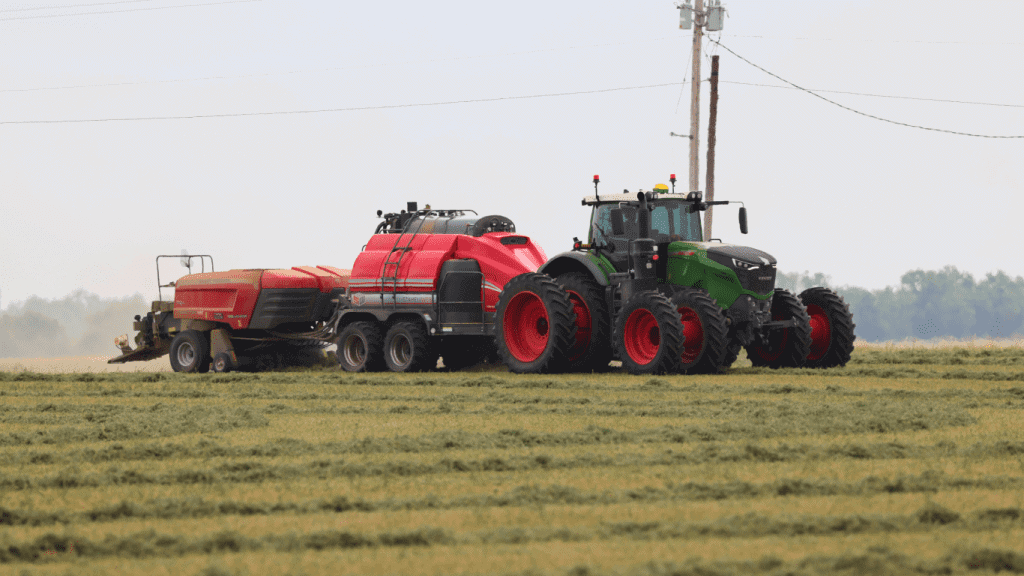
The machine boils water into steam and runs it through manifolds right at the baler pickup and feed chamber. The hay comes through, catches a shot of steam, and that steam soaks in almost instantly. Every leaf, every stem gets treated, and the bale never actually gets wet.
And it barely uses any water. One gallon turns into roughly 1,700 gallons of steam, so you’re only adding about 2–3% moisture by weight. That’s plenty to keep the leaves on. Studies have clocked it at around 58% less leaf loss than baling with good natural dew. There’s a sensor — the Gazeeka — reading every bale as it comes out the chute, so you just nudge the steam up or down from the cab till it’s dialed in right.
Bottom line: you bale when the hay’s ready, not when the dew decides to show up.
And It Matters Even More Around Here
This is the part that hits home for North Texas. Hot, dry, windy — that’s about the worst setup for catching dew there is. Which is exactly why a steamer pays off out here faster than just about anywhere.
That’s the deal with the rig running at Leman Farms over by Vernon. Instead of cramming everything into a short window before daylight, they can bale a full day and still put up leafy, premium hay. That’s a whole different way to run an operation.
Now Add the Double Baler
So the steamer handles the moisture. The Massey Ferguson SB.1436DB double baler handles everything else — and doubles your output while it’s at it.
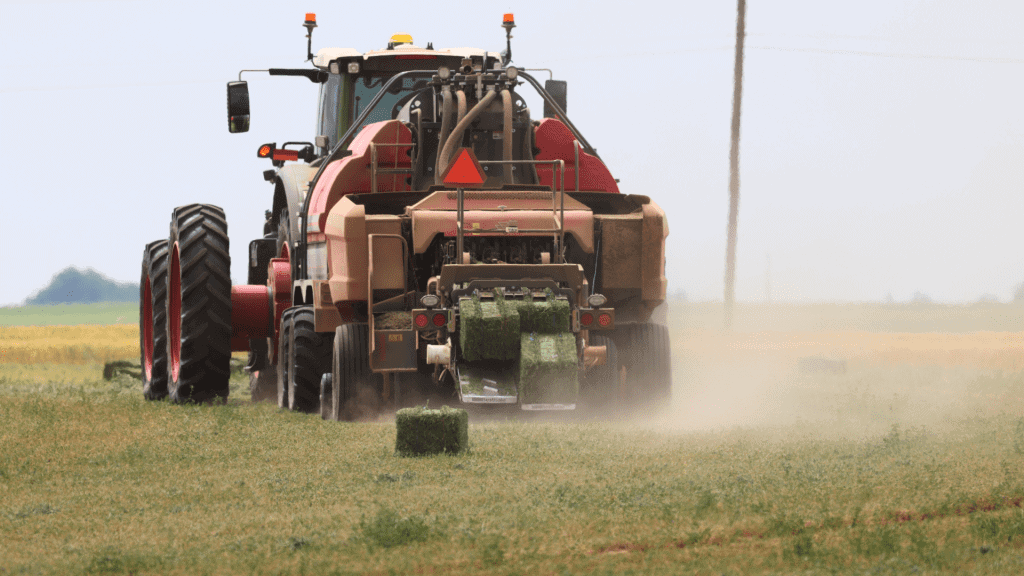
It’s the first double small square baler out there, and it kicks out two finished 14×18 bales every pass instead of one. The SimplEbale system lets you watch flake count, bale length, and bale weight right from the seat, so every bale matches the last one. Put that together with the steamer’s moisture control and you’ve got exactly what buyers pay for: uniform, leafy, heavy, good-looking bales, all day long.
And no — this pairing isn’t a happy accident. Staheli West and AGCO built these two to run together. That’s the exact combo in the photo up top.
What You Actually Get Out of It
Here’s the short version of why this setup’s worth a look:
- More hours to bale — go when the hay’s ready, not just at sunup.
- Less leaf loss — keep the part of the plant that’s worth money.
- Better grades — more premium hay, less low-grade.
- More tonnage — leaves are weight, and you’re holding onto them.
- Twice the bales — two rows a pass, same field, same fuel.
Add it all up and it comes down to one thing: you quit baling around the weather and start baling on your terms.
Come See it Run
Honestly, the best way to get it is to watch one work. Take a look at the Staheli West and Massey Ferguson lineups, or stop by your nearest Parallel Ag store and we’ll talk through what it’d do for your place.
And whatever you run, you’ve got our 24/7 parts and service behind you — because good iron’s only as good as the folks standing behind it.
# # #
With sixteen locations throughout Texas, Oklahoma, Kansas, Missouri, Iowa, Illinois, and Minnesota, Parallel Ag will provide quality parts, various equipment sales, and 24/7 exceptional service across the agricultural industry. Visit us in person or online at www.ParallelAg.com for more information.
