
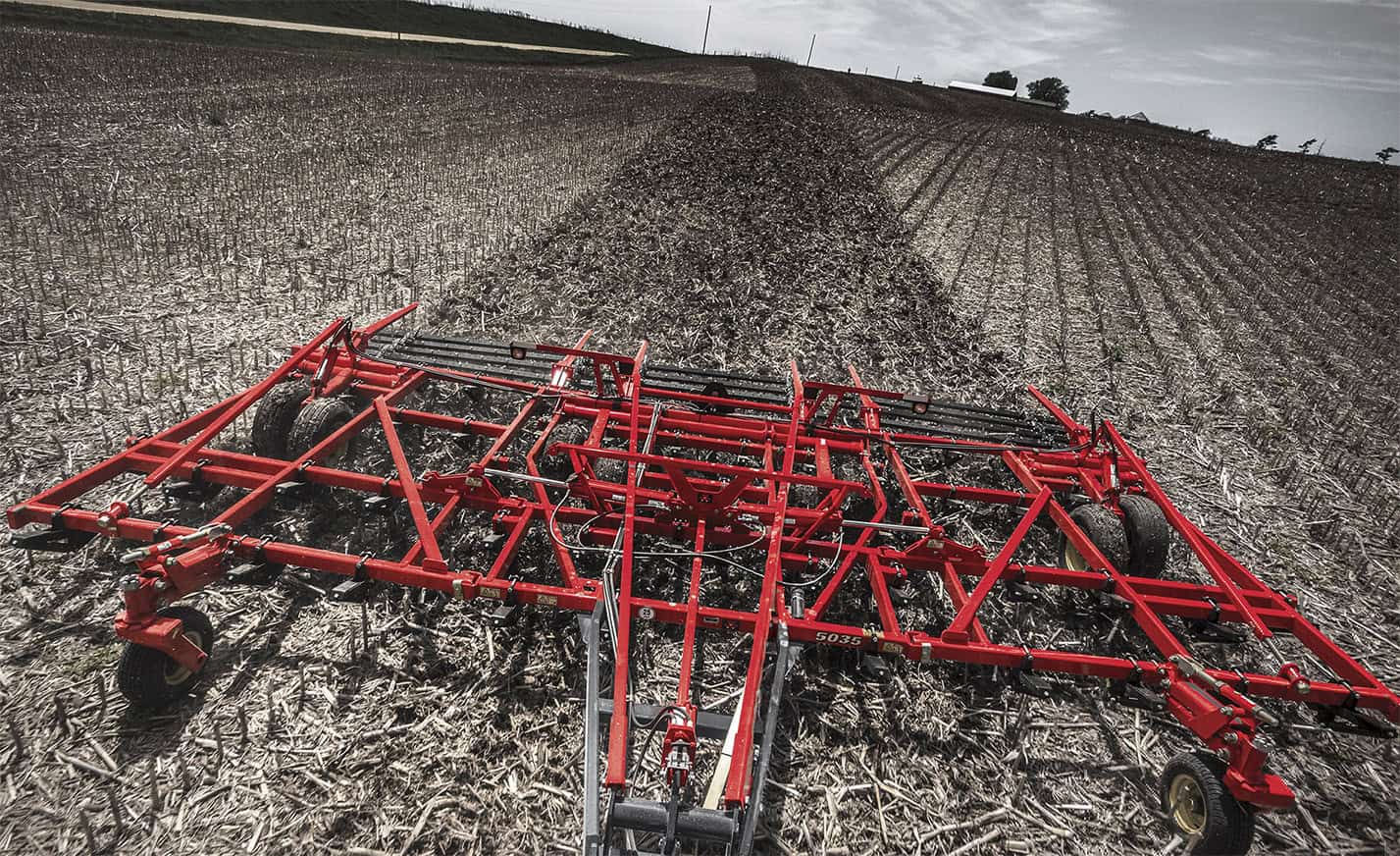
Set up next year’s crop while the window is still open
Once harvest wraps up, there’s a short window before the ground freezes or turns too wet to work. What you do with your fields in that window can set the tone for planting season. Done right, fall ground prep helps manage residue, fix problem areas, and get fertility in place so you can hit the ground running in the spring.
Every operation is different, and the right approach depends on your soils, your rotation, and your goals. Here’s a practical rundown of what to think about before the freeze.
1. Start With a Soil Test
Fall is one of the best times to pull soil samples. Results come back in time to plan fertilizer and lime before spring, and you’re testing the field as the crop left it.
- Sample consistently: pull samples at the same depth and the same time of year as past tests so you can compare results over time.
- Check pH: lime takes months to react with the soil, so applying it in the fall gives it time to work before next season.
- Look at phosphorus and potassium: build your fall and spring fertility plan around the results.
2. Decide Whether Fall Tillage Fits Your Plan
Fall tillage isn’t the right call for every field. It can help break down heavy residue, smooth out ruts from harvest, and warm and dry soils faster in the spring. It can also leave ground more exposed to wind and water erosion over the winter and use up soil moisture.
Before you hook up a tillage tool, think about what you’re trying to accomplish in each field. Heavy corn residue headed into corn again may benefit from some fall work, while erodible ground or fields in a no-till or minimum-till system may be better left alone.
3. Manage Residue
Residue management starts at harvest with an even spread of chaff and stalks behind the combine. From there:
- Size residue down with a vertical tillage tool or stalk chopper if heavy residue has caused planting problems in the past.
- Mix residue with soil to speed up breakdown, but only as much as the field needs.
- Leave cover where you can, especially on slopes and erosion-prone ground.
4. Deal With Compaction the Right Way
Harvest traffic from combines, grain carts, and trucks can leave compacted areas behind, especially if harvest ran into wet conditions.
- Find it first: use a soil probe to locate the compacted layer and how deep it is before deciding to rip.
- Go just below the layer: set deep tillage only slightly below the compacted zone. Going deeper burns fuel and time without added benefit.
- Wait for the right conditions: only work ground when it’s dry enough to shatter. Tilling wet soil smears it and can make compaction worse.
Running short on time and the ground still isn’t fit? A few things to keep in mind:
- Go shallow, not deep. A light pass does far less harm to wet soil than deep ripping. Save deep tillage for a field that’s ready for it, or wait until next fall.
- Use the right points and shanks. Some setups shatter soil well in dry conditions but smear it when it’s wet. Our parts team can help you find the right options for your tool and your ground.
- Think about traffic next harvest. Most compaction comes from heavy loads, so limiting where grain carts and trucks travel in the field, and keeping tires properly inflated, keeps the damage to fewer acres.
5. Get Fall Fertility in Place
- Apply lime based on your soil test so it has time to adjust pH before planting.
- Apply phosphorus, potassium, and sulfur in the fall if your soil test calls for them and it fits your workload.
- Be careful with fall nitrogen. If you apply anhydrous ammonia in the fall, extension specialists recommend waiting until soil temperatures at a 4-inch depth drop below 50°F. Cooler soil slows the conversion of ammonium to nitrate, which is the form that can be lost over winter and early spring.
- Skip fall anhydrous on sandy soils, which are prone to leaching. Fall application works best on silt loam and heavier soils.
- Consider a nitrification inhibitor to help reduce losses if soils warm back up after application.
- Watch soil moisture. Very dry soil can keep the injection furrow from sealing and let ammonia escape. Deeper injection and good sealing help in dry conditions.
6. Get Ahead of Weeds
Fall is a good time to take care of weed problems before they carry over into next season, especially on fields that sat fallow this year with no crop to compete with weeds.
- Scout after harvest and note where problem weeds escaped this year, so you can plan next year’s herbicide program.
- Consider a fall burndown for winter annual weeds like marestail and henbit, which are easier to control in the fall than in the spring.
- Keep tough weeds from adding to the seedbank. Palmer amaranth and waterhemp produce huge numbers of seeds, so any plants still standing in fallow fields or field edges are worth controlling before they go to seed.
7. Protect Your Ground From Erosion
- Keep residue on the surface on sloping and highly erodible ground.
- Work across the slope or on the contour instead of up and down hills.
- Maintain terraces and waterways, and avoid tilling through grassed waterways.
- Consider cover crops to hold soil, build organic matter, and protect bare ground over the winter.
8. Fix Field Problems While You Can
- Smooth out ruts and washouts from harvest with a light pass over just the damaged spots. There’s no need to work the whole field to fix a few problem areas.
- Check drainage, including tile outlets, ditches, and low spots that held water this year.
- Repair terraces, field entrances, and fence lines before winter weather sets in.
9. Set Up and Maintain Your Tillage Equipment
Before you head to the field, give your tillage tools a once-over, and give them a good cleanup when the work is done.
- Check wear parts: points, shanks, sweeps, disc blades, and harrow tines.
- Inspect bearings and hubs, and grease all fittings.
- Sharpen or replace disc blades, and adjust down pressure for each field’s conditions.
- Level the tool front to back and side to side, and check depth settings in the field.
- Clean and store it properly once you’re done. Grease fittings, coat wear surfaces to prevent rust, and park it inside if possible.
What This Looks Like Across Our Area
Parallel Ag customers farm in Oklahoma, Texas, Kansas, Missouri, Illinois, Iowa, and Minnesota, and fall field work looks different depending on where you are.
Southern Plains (Oklahoma, Texas, Kansas): Much of this ground is already in wheat or headed for grazing, so fall work often centers on fields going to summer crops. Wind erosion and soil moisture are big concerns, so keeping residue on the surface is especially valuable. Soils also stay warm later in the fall, which pushes back the window for fall anhydrous.
Corn Belt and northern areas (Iowa, Illinois, Minnesota, Missouri): Heavy corn residue and a shorter window before freeze-up make fall residue management and fall fertility more common. Soils cool off sooner, but wet fall conditions can limit the days when ground is fit to work. Your local
We’re Here to Help
Whether you need wear parts for your tillage tools, a new piece of equipment for your ground prep, or service before you head to the field, Parallel Ag can help. Contact your local Parallel Ag store or salesman to talk through what fits your operation.
# # #
With sixteen locations throughout Texas, Oklahoma, Kansas, Missouri, Iowa, Illinois, and Minnesota, Parallel Ag will provide quality parts, various equipment sales, and 24/7 exceptional service across the agricultural industry. Visit us in person or online at www.ParallelAg.com for more information.
