We all know hay season has a way of sneaking up on you. One day you are finishing chores in a hoodie. The next day you are watching the forecast like a hawk looking for the window to get hay down, dried, and baled.
We are only a few weeks away from that first window, especially in the Southern Plains. A thorough pre-season hay baler inspection now will save you breakdowns, missed weather windows, and fire risks once the hay is down and ready to bale.
Why Pre-Season Hay Baler Maintenance Matters
When hay is cured and the forecast shows a storm in 24 hours, you can’t afford a baler breakdown. Pre-season maintenance reduces downtime, extends equipment life, and lowers repair costs compared to emergency in-season fixes. According to hay equipment experts, year-round care and a pre-season inspection significantly cut surprises and help you bale at the ideal moisture for quality and storage life.
Our Southern Plains customers often push through hot, windy baling windows wear leaf loss and fire risk are already high. Going into that season with worn bearings, dry chains, and cracked belts is asking for trouble. A good pre-season maintenance checklist helps you start the season strong.
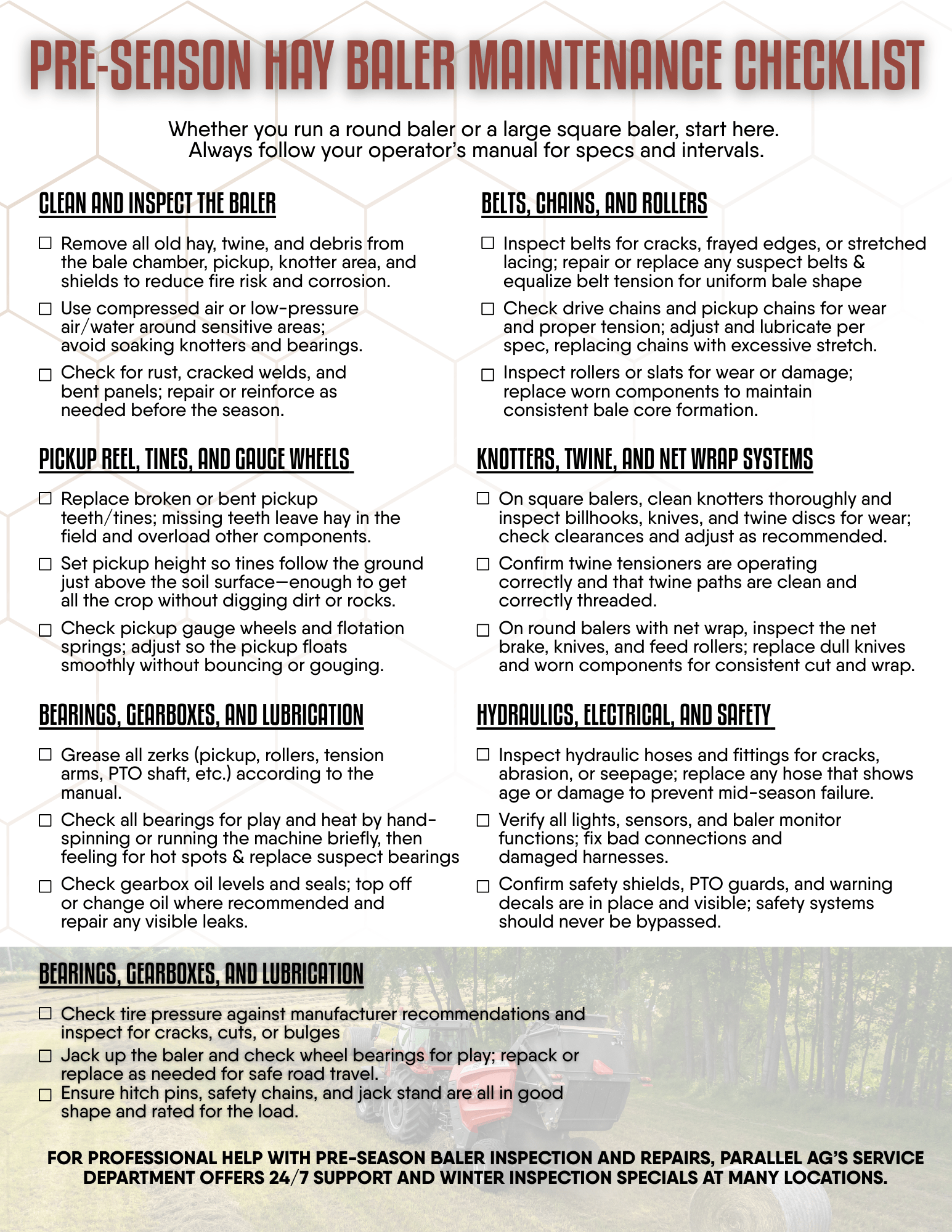
Pre-Season Hay Baler Maintenance Checklist
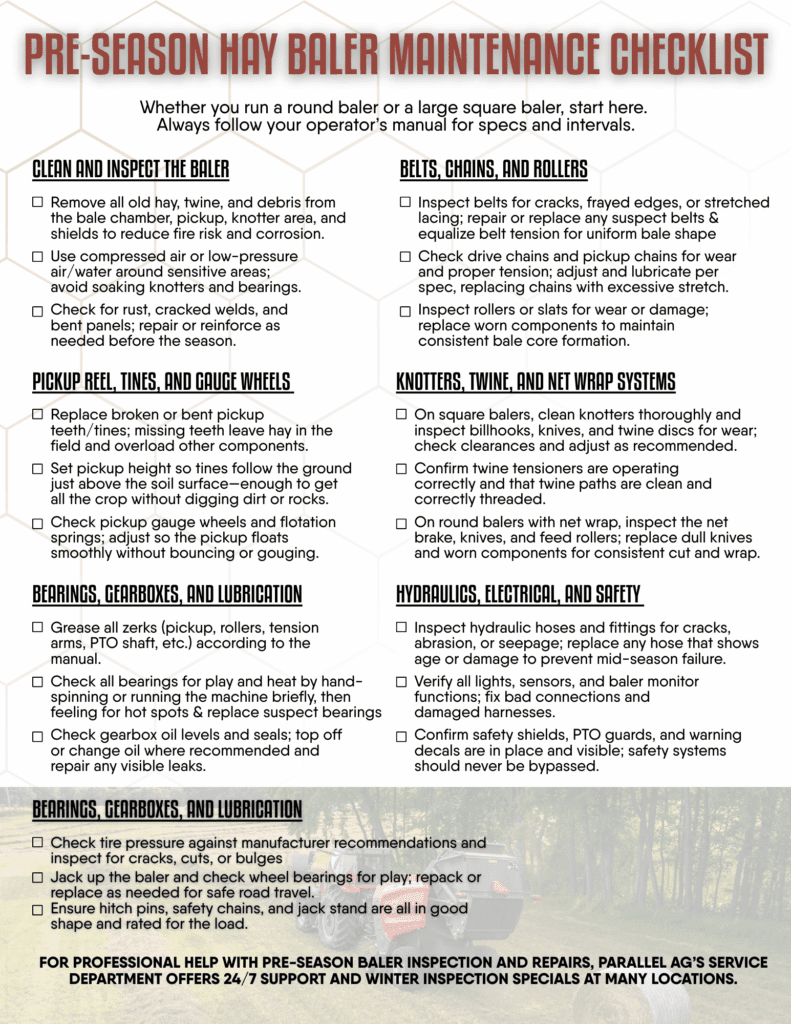
Whether you run a round baler or large square baler, start here. Always follow your operator’s manual for specs and intervals.
1. Clean and Inspect the Baler
- Blow out old hay, dust, and chaff from the bale chamber, pickup, shields, and knotter area
- Remove leftover twine or net wrap
- Check for packed debris around bearings and rollers.
- A clean baler runs cooler and safer.
2. Belts, Chains, and Rollers
- Look for cracks, frayed edges, or weak lacing
- Make sure belt tension is even to uniform bales
- Inspect chains for stretch and proper tension
- Lubricate chains per spec
- Check rollers or slats for wear
3. Pickup Reel and Teeth
- Replace broken or bent teeth
- Set pickup height just above the ground to avoid dirt and rocks
- Check gauge wheels and springs so the pickup floats, not bounces
4. Knotters, Twine, and Net Wrap
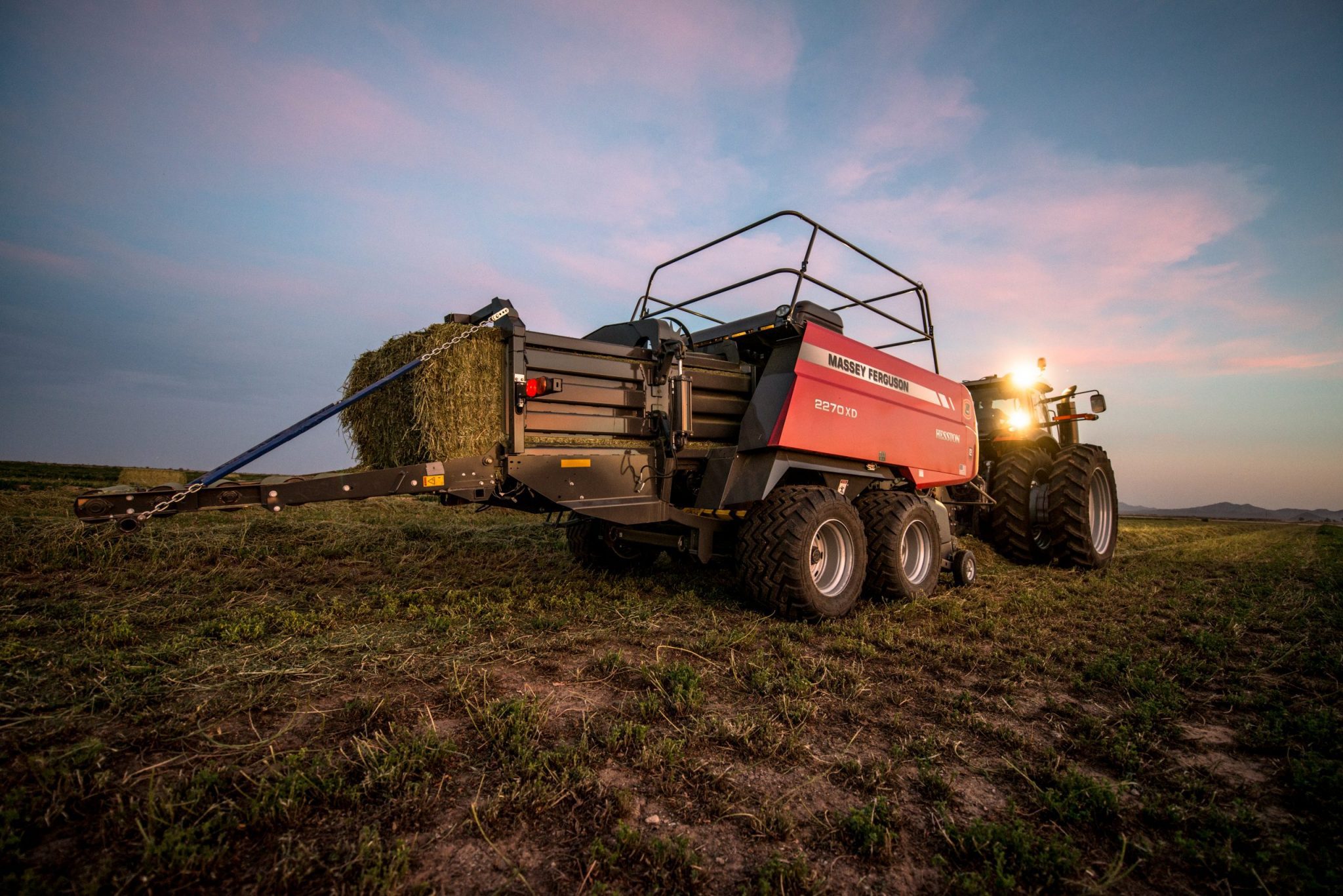
If you run a Massey Ferguson large square baler, pre-season knotter attention is critical.
- Clean knotters thoroughly
- Inspect billhooks, knives, and twine discs
- Check twine tension and routing
- Replace dull knives
On round balers with net wrap:
- Inspect the net brake
- Check feed rollers
- Replace dull or damaged cutting knives
5. Bearings, Gearboxes, and Grease
- Grease every zerk according to the manual
- Spin bearings by hand and feel for roughness
- After short test run, check for hot spots
- Check gearbox oil levels and seals
6. Hydraulics and Electrical
- Inspect hydraulic hoses for cracks or leaks
- Check fittings for leaks
- Test all monitor functions
- Inspect wiring harnesses for rub points
7. Tires and Transport
- Check tire pressure
- Look for cracks or bulges
- Check wheel bearings for play
- Inspect hitch pins and safety chains
First Day Hook-Up
When you hook up the baler for the first time this spring, follow this simple startup routine:
Walkaround inspection – Check shields, guards, hoses, tires, and any signs of leaks or loose components.
Grease and lube – Hit all daily grease points and verify chains are lubricated.
Low-speed PTO test – Engage PTO at low rpm, listen for abnormal noises, and watch for vibration.
Full-speed test – Bring PTO to operating speed; confirm pickup, belts, and knotters/net wrap cycle correctly with no crop.
Test bales – Bale a small batch (10–20 bales), then stop and check bale density, shape, and tying/wrap performance. Use these test bales to make final adjustments on density, pickup height, and twine/net timing before you commit to a whole field.
If you need parts – belts, pickup teeth, chains, or net wrap – reach out to your nearest Parallel Ag parts counter or browse inventory online: https://www.parallelag.com/.
Example Scenario: Alfalfa and Grass Hay in West Texas
A hay and cattle operation near Lubbock, Texas typically cuts irrigated alfalfa and gras hay three to four times a year. Last season, they lost almost a full afternoon of baling because a failed pickup bearing started a small fire in the balers, forcing them to stop, clean, and wait for replacement parts. This year, they worked with our Lubbock team to do a full pre-season baler inspection. The technician found multiple bearings with play, several cracked pickup teeth, and a twine knife that was getting dull.
They replaced those components in February, greased and adjusted everything, and ran a test sequence behind the shop. When the first cutting window hit in late May, they baled straight through a tight 36-hour weather window, finished ahead of the rain, and avoided emergency repair bills. For hay producers around Lubbock and the Texas Panhandle, that kind of uptime can be the difference between premium-quality bales and weather-damaged feed.
Don’t Forget the Rest of Your Hay Line
Your baler is the centerpiece, but cutters, rakes, and tedders also need pre-season attention. Experts recommend inspecting blades or discs, conditioning rolls, and rake tines as part of a whole-hay-line prep to prevent bottlenecks when the crop is ready.
Parallel Ag stocks a wide range of new and used hay and forage equipment like disc mowers, mower-conditioners, rakes, tedders, and balers from AGCO brands and other leading manufacturers. Explore hay and forage equipment options here: https://www.parallelag.com/equipment/?category=Hay and Forage Equipment.
Take Advantage of Winter Service Specials
Parallel Ag’s 2026 Winter Service Specials run through February 28, 2026, with AGCO Southern Plains and Midwest service programs that include hay and forage equipment inspections at participating locations. These packages discount labor and AGCO parts when repairs are approved and completed during the inspection program window.
If you’re a hay producer near any of our seven-state locations, now is the time to book a pre-season baler and hay-line check before slots fill up. Use our contact form to reach your nearest dealership: https://www.parallelag.com/contact-us/
FAQ
Plan your pre-season hay baler maintenance at least 4–6 weeks before your typical first cutting window so you have time to order parts and schedule shop work if needed.
The most common problems include worn belts, stretched or dry chains, failing bearings, broken pickup teeth, and out-of-adjustment knotters or net wrap systems.
Most manufacturers recommend daily greasing during heavy use, plus additional lubrication every set number of bales or hours. Always follow the intervals in your operator’s manual.
Keep the baler clean of dry debris, check and replace hot bearings, avoid oil leaks, and carry a fire extinguisher on the tractor or baler during baling operations.
Yes. Parallel Ag’s service department provides full hay baler inspections, in-field setup assistance, and repairs across Oklahoma, Texas, Kansas, Missouri, Illinois, Iowa, and Minnesota, with 24/7 support at many locations. Contact your nearest store here: https://www.parallelag.com/contact-us/.