
When Winter Hits, Your Feeding System Better Make Sense
Winter has a way of exposing weak spots.
If your setup requires five extra trips, three gates, and climbing in and out of the cab all morning, you feel it fast. Especially when it’s 12 degrees, the wind won’t quit, and the lot is soup.
The operations that stay ahead in winter are the ones that can:
- Load fast
- Mix consistent rations
- Feed efficiently
- And stay in the cab as much as possible
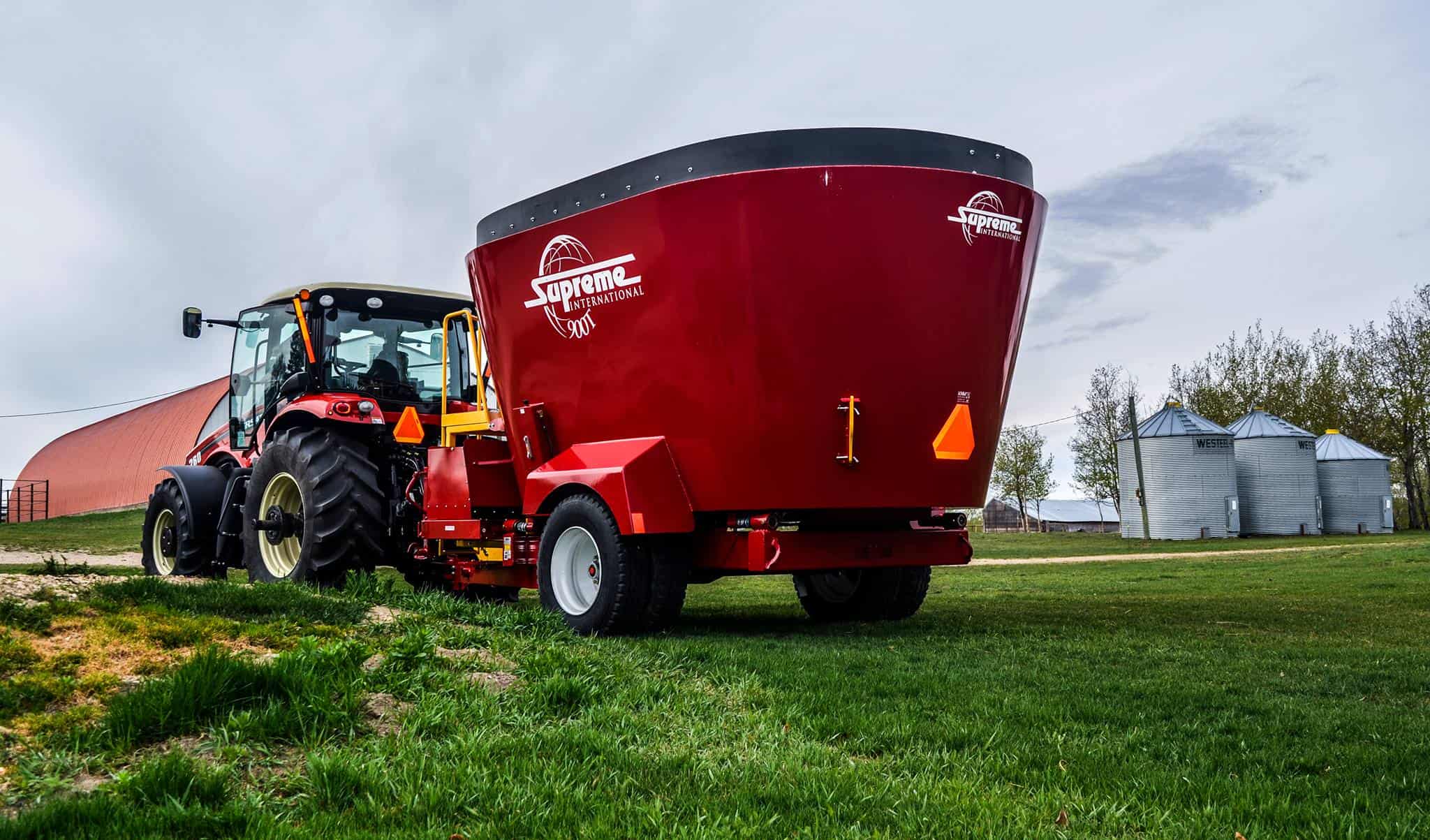
That’s where a Supreme International vertical mixer paired with a Manitou MLT telehandler just makes sense.
Why This Combo Works
A Supreme vertical mixer will process whole round bales and give you a consistent, uniform ration. That part is proven.
But the mixer is only as efficient as what’s loading it.
That’s where the Manitou telehandler earns its keep.
Instead of jockeying around with a short loader or trying to stretch with a skid steer, a telehandler gives you:
- Reach to drop full bales straight into the tub
- Lift capacity to handle heavy wet bales
- Height to stack hay multiple tiers
- The ability to stay back from piles and fence lines
Fewer trips. Less spinning. Less mud.
If you’re feeding anywhere across our territory, our team can help you size both pieces so they actually work together.
What a Smart Winter Morning Looks Like
Here’s a realistic setup we see across a lot of beef operations.
1. Hay is staged close to the pad
Bales get hauled in and stacked where a bale bed can unload quickly. The goal is simple:
Short drive time. Straight lines. No unnecessary backing.
2. The Manitou is the dedicated loader
- Spear a bale.
- Drop it into the Supreme.
- Follow with silage or byproducts using a bucket.
The reach means you’re not crowding piles or rubbing posts. The lift means you’re not pushing the machine.
3. The Supreme handles the ration
Supreme vertical mixers are built to cut whole bales and blend them into a uniform mix that helps reduce sorting.
Load dry forages first.
Then wet ingredients.
Then grain or mineral.
Keep the order simple and consistent so anyone can jump in and repeat it.
4. Stay in the cab
On many outfits, one person loads and feeds.
A smart layout reduces:
- Gate opening
- Switching equipment
- Climbing in and out
On those single digit wind chill mornings, that matters more than people admit.
Browse equipment here:
Supreme vertical mixers:
https://www.parallelag.com/new-equipment-showrooms/supreme-international/vertical-feed-mixers/
Manitou telehandlers:
https://www.parallelag.com/new-equipment-showrooms/manitou/telehandlers/
Winter Feeding Checklist: Tighten Up Your System
If you’re running this combo, here’s how to make it smoother.
✔ Lay out your feed pad right
- Keep a straight, all weather lane.
- Leave room to turn with a full mixer.
- Avoid backing on ice and ruts.
✔ Group bales by quality
Higher quality hay close and easy for late gestation or lactating cows.
Lower quality for dry cows or bedding.
Don’t make yourself dig every morning.
✔ Match attachments to the job
- Bale spear or grapple for whole bales
- Large bucket for silage and distillers
We can help you spec forks and buckets that actually fit your Manitou and feeding style.
✔ Inspect daily in cold weather
For the Supreme:
- Check knives
- Look over gearboxes
- Watch discharge components
For the Manitou:
- Tire pressure
- Hydraulic hoses
- Boom function
- Warm it up before heavy lifting
Cold weather is hard on everything.
Our service teams offer winter service specials if you want to catch issues before they shut you down:
https://www.parallelag.com/service-department/
Using a Telehandler to Break Ice
A lot of cattle guys don’t talk about this part, but it’s real.
A telehandler can be useful for breaking pond or tank ice safely from shore.
Extend the boom.
Use bucket pressure to fracture ice.
Pull pieces back toward the bank.
The reach keeps the machine farther from the edge.
Common sense still applies. Use good judgment around water and ice. But having reach beats crowding the bank with a short machine.
What This Looks Like on a 300 Cow Outfit
Picture a 300 cow operation outside Chickasha.
- Supreme pull type mixer feeding once per day
- Manitou telehandler doing all loading
- Bales staged in rows near the pad
Daily routine might look like:
Warm up the telehandler.
Load the mixer.
Switch to the tractor.
Feed the bunks.
After feeding, the telehandler is free for:
- Scraping lots
- Loading manure
- Breaking ice
- General yard work
One loader handling both feeding and chores is common across Oklahoma, Texas, Kansas, Missouri and the Midwest.
It’s about efficiency. Not fancy. Just efficient.
Why Parallel Ag for Mixers, Telehandlers, and Service?
Parallel Ag works with livestock producers across Oklahoma, Texas, Kansas, Missouri, Illinois, Iowa, and Minnesota to keep winter feeding systems running efficiently. Whether it’s loading feed, handling hay, or keeping equipment moving in tough conditions, our teams understand what cattle operations need when the weather turns cold and chores still have to get done.
- Local sales teams who understand winter feeding realities—mud, wind, and short daylight.
- Access to both new and used mixers and loaders: https://inventory.parallelag.com
- 24/7 service coverage in season to keep feeding systems running when cattle can’t wait: https://parallelag.com/service-department/
Equipment availability and specs vary by location, so checking current inventory or calling your nearest store is always the best next step.
FAQ
Do I need a telehandler, or will a skid steer load my Supreme mixer?
Both can work, but telehandlers offer greater reach and lift height, which is a big advantage when loading tall mixers or stacking hay several tiers high. If your main jobs are loading mixers and handling hay in open yards, a telehandler often makes more sense.
Can a Supreme mixer process whole round bales?
Supreme vertical mixers are designed to handle whole bales and long-stem forages, cutting and mixing them into a uniform ration that reduces sorting and keeps intakes consistent.
How big of a telehandler do I need for winter feeding?
The right size depends on bale weight, mixer height, and how far you need to reach. Manitou MLT models cover a range of lift capacities and heights, so it’s best to match a machine to your heaviest expected loads and stacking needs.
Is it safe to use a telehandler to break pond ice?
Telehandlers have the reach and strength to break and drag ice from the shore, which helps keep machines and operators farther from the water’s edge. Operators should still use caution, follow manufacturer safety guidelines, and avoid positioning any machine on questionable ice.
Who can help me spec a Supreme mixer and Manitou telehandler combo?
Your local Parallel Ag store—such as the Chickasha, OK location—can help you size the mixer, choose a telehandler model, and select attachments that fit your herd size, ration, and yard layout: https://www.parallelag.com/contact-us/
